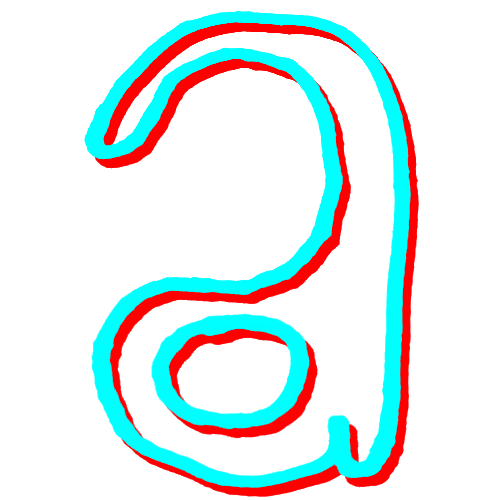
Time is on (y)our side: Five Works from Community Mausoleum
Community Mausoleum, an independent publisher originally from Cleveland but now based in Maine, has released four chapbooks, a full-length collection (since the writing of this essay, they’ve published a second full-length collection: Brendan Sherry’s Helene or Dont x baby), and a literary magazine, Coma, since May of 2024. When I ordered a few of the recent titles, I received the entire catalog with a kind note from editor Zach Peckham.

Note from Zach Peckham. Image by Kamden Hilliard.
I love the “Why not!” here, & if there's an ethos for Community Mausoleum, it could be “why not,” which expresses a kind of gleeful approach to our collective tenancy on the edge of ever-later empire. The official slogan for the press is “Time is on your side,” [1] and I propose an examination of the entire catalog to see if we can divine meaning from this phrase.
ICEWALKER & DIRTWORM, Eric Wallgren. Cleveland: Community Mausoleum, 2024. 27 pages.
Icewalker & Dirtworm, the first publication from Community Mausoleum, is forest green, staple-bound, and printed by Cleveland’s own Outlandish Press, as are all the other titles in the catalog.

Figure 1. Cover Image of Icewalker & Dirtworm by Eric Wallgren. Image courtesy of Community Mausoleum.
The poems are spoken by eponymous “Icewalker”—whose “instinct / is to continue further, / sometimes needing constantly / to balance a storm— / to toss it in front of him / lightly” [2]—and “Dirtworm,” who “has wriggled free from / one vice grip hug after another / so that one day maybe / he might break out into / a wide arid desert.” [3] These two elemental figures are locked in an interminable conflict, neither seems able or willing to end:
Dirtworm distrusts Icewalker, and
Icewalker thinks that Dirtworm is a
drag at parties, needlessly pulling
dead deer
to spectacular galaxy bursts
that he doesn't see because of the
pinprick scope of his focus... [4]
In this space of conflict, both figures are amazed by each other, which is always the problem, isn’t it? We so often love what torments us. For all the “distrust,” wet blanket-ism, and “spectacular galaxy bursts,” I, for one, read a redemption that reminds me of Richard Siken’s Crush—it suggests that love is still always worth a try. Wallgren doesn’t deny the troublesome, dangerous, and hypocritical elements of love, but he reminds us that “...It’s warm at the bottom / of an aching river, sitting / cross-legged on the floor— / the rushing water / all around / feeling so much like love.” [5] What could easily be described as drowning is, instead, transformed into a site of meditation, reflection, and sensory experience. Both in the ice that is the entirety of Icewalker’s world and the “end-to-end, / top-to-bottom / dirt” [6] of Dirtworm’s world, potential overwhelm is averted by knowledge of, connection to, and resistance of an opposite, different, inverse, or even irreconcilable substance. They do a kind of tango. The earthiness, groundedness, and centered energy of dirt is countered by the glassy, brittle, and jagged energy of ice. Moreover, these things do not destroy one another; instead, they share the Earth together, each being provided a particular time of dominant expression, passing it back and forth forever. And by the end of the chapbook, it is the coming together of these substances that animates the world:
Resting mountain:
it will only move
if it doesn't know it’s moving.
Carried
by sunlight,
or by ache,
or by aching sunlight.
Melting ice.
Watered soil. [7]
The conflicts of our world propel us, ultimately moving our world forward, right on schedule. As Icewalker fades in the face of summer, he waters the dirt to make way for processes of growth, erosion, and Earth's movements. Love might mean being destroyed (Icewalker melting in the May sun) or drowned (Dirtworm drowning in Springtime snowmelt), but in that moment of destruction, “Molecules / passing through an aroma / of thrilling, / hot confusion. Galaxies, / speckled sand / flow[] downward” [8] and it’s gorgeous.
Important Groups by Hilary Plum. Cleveland: Community Mausoleum, 2025. 46 pages.
Important Groups is a chapbook-length poem by Hilary Plum. The title comes from a Law and Order epigraph: “in the criminal justice system, the people are represented / by two separate yet equally important groups...” [9] The quote goes on to identify the two “important groups”: “the police” and “district attorneys.” Suffice to say, Plum takes the absolute piss out of this distinction and has a kind of fun doing it. Plum’s fun is in the tradition of writers like Chelsea Minnis, Harryette Mullen, and Brenda Hillman, who offer playful and engaging forms of critique.
This long poem eschews narrative for an associative and potent exploration of who is granted or damned into group status and why. Women and children, for example? Not a group. Universities and senators, on the other hand? A group. For Plum, group formation is an agentic sociality for accomplishing petty, nefarious goals, or a label assigned to, as Merriam-Webster helpfully puts it, “a number of individuals assembled together or having some unifying relationship or action,” [10] or something else entirely. Plum’s kaleidoscopic, heady fusion of subjects is an effective exploration of the intangible connections, both large and small, that unite seemingly disparate subjects.
I used to argue with a big 9/11 Truther
whose evidence against the “Official Narrative”
included how the hijackers got lap dances the night
before they could not have been
pious he said I personally thought
this was stupid before dying most people
would get that lap dance epistemically
consistency has its own problems how often
do men think about the Roman Empire
how often do men think about
Iraq #notjustmen [11]
Who is allowed to have one thought at a time? Who can set aside race, gender, class, or politics? For whom are questions of national event, identity, and history a hobby and whose humanity is governed by these same questions? As Plum says, “consistency has its own problems” [12]; the moment of oneness, unity is over in these poems, and instead, we are exposed to a riotous set of connections, concerns, and collusions that are their own kind of Trutherism. Plum is writing against a global set of Official Narratives that intentionally obscure the truth.
a politician said a ship that big
cannot sink the encampments
are asking about corporations and investments
about the university’s money and is it profiting
off the occupation of Palestine
is it profiting off drones with machine guns
the surveillance tech that helps them target
the bulldozers that destroy houses so people
of a different ethnicity can live in that place
we cannot exclude all of that money? [13]
Our world encourages us to understand people, institutions, and companies as individuals: no one is beholden to anyone else. Plum identifies a collusion between politics, education, and finance at the heart of the genocide against the Palestinian people. If Important Groups is “about” anything, it is about the terrors of the world and the groups we form to weather them. But perhaps these groups we choose and that choose us are a site of intervention; we don’t have to belong to what hurts us or defend anything. Why, Plum asks, “[are we] holding / a line”? [14]
Demonstration Forest by Kelly Clare. Cleveland: Community Mausoleum, 2025. 37 pages.
A “demonstration forest” is a living laboratory for sustainable land and forest management practices. Kelly Clare’s Demonstration Forest is a triangular chapbook-length poem about our shared digital landscape, the problems of management, and the difficulty of living an authentic life under the sometimesa shadowy, sometimes reality of digital capitalism. The shape of this collection, literally and thematically, is a testament to Kelly Clare’s creativity and Community Mausoleum’s execution. The staple-bound, bright yellow right triangle is eye-catching. Standing up, it resembles the silhouette of an evergreen tree; it’s half a rectangle, allowing for incredibly specific use of the page.which demands an experimental relationship with the page.
“In a demonstration forest the trees are plasticy... This year may or may not require purchase.” [15] This post-industrial, literal reproduction also seems to require a kind of license to participate. No longer is the natural/digital world free to access: the national parks, social media platforms, wildlife protection non-profits, and “enshittification” [16] of the internet have all but begun guaranteeing barriers to accessing the physiodigital landscapes we traverse every day.

Figure 3: Pages 8 and 9 of Kelly Clare’s Demonstration Forest. Image by Kamden Hilliard.
The impossibility of these hybrid objects—“pollen... from the modem;” “chlorophyll router” [17]—speaks to their inevitability in a capitalist society, in which capital seeks its own reproduction ruthlessly. Here we can imagine capital filling in even the very natural and okay-seeming gap between the digital and natural worlds.
Similarly, the “demo” becomes a simultaneous site of destruction and future potentiality; demo as in destroy and demo as in demonstrate the feasibility of a new concept. Further blurring this line, Clare asks “how, exactly, / does a signal bite?” [18] The anthropomorphized digital world attempts to engage with the natural world, only to find signals lack the essential components of jaws, muscles, and teeth, and while the digital can imitate the natural, this imitation is not always of rewarding quality or even possible.
If the digital has invaded the natural, Clare’s understanding of the forest as a “prop house,” or a place to store things between performances, helps us imagine the demonstration forest as an in-between, a bardo, or purgatory for objects and ideas moving between digital and physical worlds. It is an invisible place not unlike the one where we wait to be born: “But then again, is all insurance invisible? / Or is the invisible insured at cost?” [19] Does insurance exist as anything beyond a series of financial instruments? Are these instruments “real”? What could it cost to manage what might not be real? Nothing? Everything? A few pages later, Clare remarks that “[she] sign[s] the paperwork to / ensure the invisible,” she signs the paperwork to keep things going. [20] Clare, ultimately, insures the invisible with new thinking that offers new shapes.
Jon Conley, Deadheading. Cleveland: Community Mausoleum, 2025. 56 pages.
Jon Conley’s Deadheading is a slick, perfect-bound, black-on-black chapbook that looks hard at the natural world and reports back on what it sees in clipped, sonic, and arresting language. The book’s first full quatrain reads: “Doomed white oak / Along the hemlock loop / Downed & touching / American cancer-root.” [21] The driving rhyme of loop/root, the metric similarities of lines one and three and two and four, and the lush language all become essential strategies for Conley across this chapbook. He casts the natural world with a thoughtful economy and minimalism, which imitates the behavior of the natural world with delight. The lines are shorter because they've been compressed with the heavy kind of force that streaks itself across time.

Figure 4: Interior of Jon Conley’s Deadheading. Image by Kamden Hilliard.
Conley’s sections are divided by images, such as the one above. They make that sense of heaviness and force palpable. This is not McMansion poetry; this is poetry made of granite. Conley’s approach to problems of humanity, description, and the natural world is scientific in its level of sociological and material detail, but also feels unifying and human:
life lies at corners
the pewter pot
named mother
father
ground their sheen
their unworn
who
is who is
who is who [22]
This ending moment evokes Emily Dickinson’s “I'm nobody! Who are you?” [23] and further complicates the problem of self by suggesting that the shell game of identity has expanded into all available terrain of life. Also, consider the anonymity and featurelessness of the cemetery itself: rolling green hills, rows and rows of headstones with some variations—pink stone, a bit taller, a huge cross here, all black—but none varied enough to become discernible. In this place, “who / is who is / who is who”?
These are old questions: without my parents, who am I? Who am I, at all? Where do I begin, and where do my parents end? How am I to care for anything in this life? The list goes on. Conley reopens these quandaries for discussion in fresh language and a deft sense of the line.
Jupiter has
two moons
moon
moon
not all noises
are night
noises even
at night
a circle becomes
an oval comes
to bear
to see [24]
Compression yields density, and density is quite plastic. In one case, it makes the “moon / moon” moment feel playful, delightful, and nearly childlike in its earnestness. The same density gives “not all noises / are night / noises even / at night” a reassuring swing. Conley knows there are things that go bump in the night, coyotes right off the, say, Columbine Trail by your house, but he also knows that they probably aren’t coming to get you. Although its title would suggest a hardness, Deadheading is warm and loving. While this life may be a complicated one, we make it worth it for one another, or as Conley puts it, “Unless sought / there is no maze.” [25]
Study for Swimming Hole by Maxwell Gontarek. Cleveland: Community Mausoleum, 2025. 62 pages.
Near the end of Maxwell Gontarek’s “Study for Swimming Hole,” the title poem of his first full-length collection, Study for Swimming Hole, he writes,
To resist the garden
where all trees
are precisely given
an appointment. [26]
Here, the garden is a human space where natural life is only permitted, “given / an appointment” to live. If this moment is to help define Gontarek’s project, it should be characterized as order-critical. The garden becomes a distinctly separate locale from the forest, glen, or meadow; it is a human-made structure. In a world where endless progress is a believable promise, Gontarek critiques this reality, noting that “The beginning just keeps on beginning / But that isn't the problem // The momentous is slate / There is no relief.” [27] The world is a Sisyphean trial of endless inputs and tasks, always beginning anew: a new job, a new lease, a new partner, a new diagnosis, and so on. The “bright” future here becomes blinding, a laser, a weapon, ready to inscribe upon or wipe clean. Instead, Gontarek argues for a return to what is: the body, the world, and each other.
Skin is the first ear
The art that claims
to dispense with metaphors
like hair
here stood on end [28]
It is the body that knows first; that is what it is good at. Boil it all down, and we are a neat set of biological sensors. To let skin, the flesh, be what does the hearing and taking in of the world is to take the world once again on its own terms. And is this not the dream? The escape from metaphor, from language altogether. Gontarek offers his reader an anti-literary sense of meaning. Of course, the way he does this is with a sense of the literary (“The incandescence of arteries” [29]) and the theoretical (“Proximities hesitate the immutable fact” [30]) to decenter both practices (Gontarek). Like Terrance Hayes, Gontarek, “too, having lost faith / in language, ha[s] placed [his] faith in language” [31] (from Hayes’ “Snow for Wallace Stevens”), and this faith is well placed because Gontarek thrives when taking liberties in language:
An almond O
Nola course noun
Anchor your no
“It is the network
that will express the ethics”
And the desert is growing [32]
The delightful l’s and o’s in the first line are continued by “Nola course noun” and further continued by “Anchor your no.” The roundness of this pattern is switched up with the i’s and e’s of the last two quoted lines. The language is textured; to speak it is to masticate or make a slow kind of music.
In these poems, the abstract, intellectual, and occasionally esoteric elements of the world come back in contact with the body and its practicalities. The swimming hole, as an image, suggests a general place or a form, but also an activity, a sociality, a way of using the body.
In Gontarek’s Study for Swimming Hole, we are a people who “would pretend to know / April for centuries” [33] but also, a people who “will remember the teeth / Every farewell has teeth,” [34] and it’s our job to provide the teeth.
Time is On Our Side
Community Mausoleum’s growing catalog of chapbooks and full-length collections represents a commitment to more experimental ideas and approaches, from Kelly Clare’s triangular Demonstration Forest to Jon Conley’s black-on-black Deadheading. The aesthetic diversity, range of subjects and approaches, and solidly Midwestern footing are notable and memorable in a publishing landscape often placing algorithmic bets on what looks like what came before it. There is nothing to panic about but the end of our available time to panic, these texts seem to say.
I met Zach Peckham on a post-graduate fellowship in Cleveland during 2020. I was pretty inside out about most everything. Struggling. I’m pretty much done with my struggles now, and the world is still waiting for me. I think that’s what Community Mausoleum means by “Time is on your side” [35]: the world is for you, still, insofar that you belong to it and it couldn’t leave you even if it wanted to, which it doesn’t. I think we are all dying, but there are some good people to die with, and they’re running around a community mausoleum—a space of mourning, ritual, and new political possibilities—under development by none other than Community Mausoleum, which could only have started in Cleveland, Ohio. Check it out.

Figure 5: The Community Mausoleum catalog as of December 2025. Image by Kamden Hilliard.
See here for a complete list of notes and works cited.